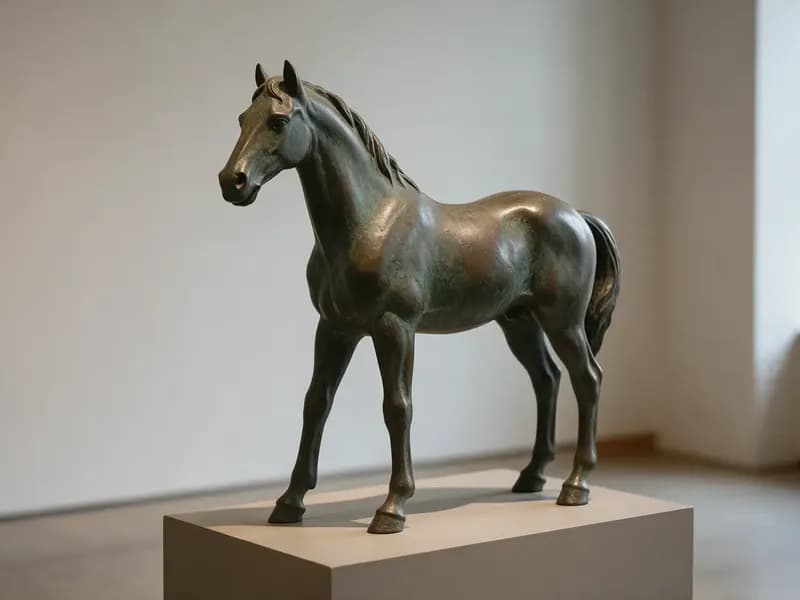
Drawing horses: proportion, movement and patience
A few proportion guides and plenty of observation help you move from a stiff drawing to a horse full of life.
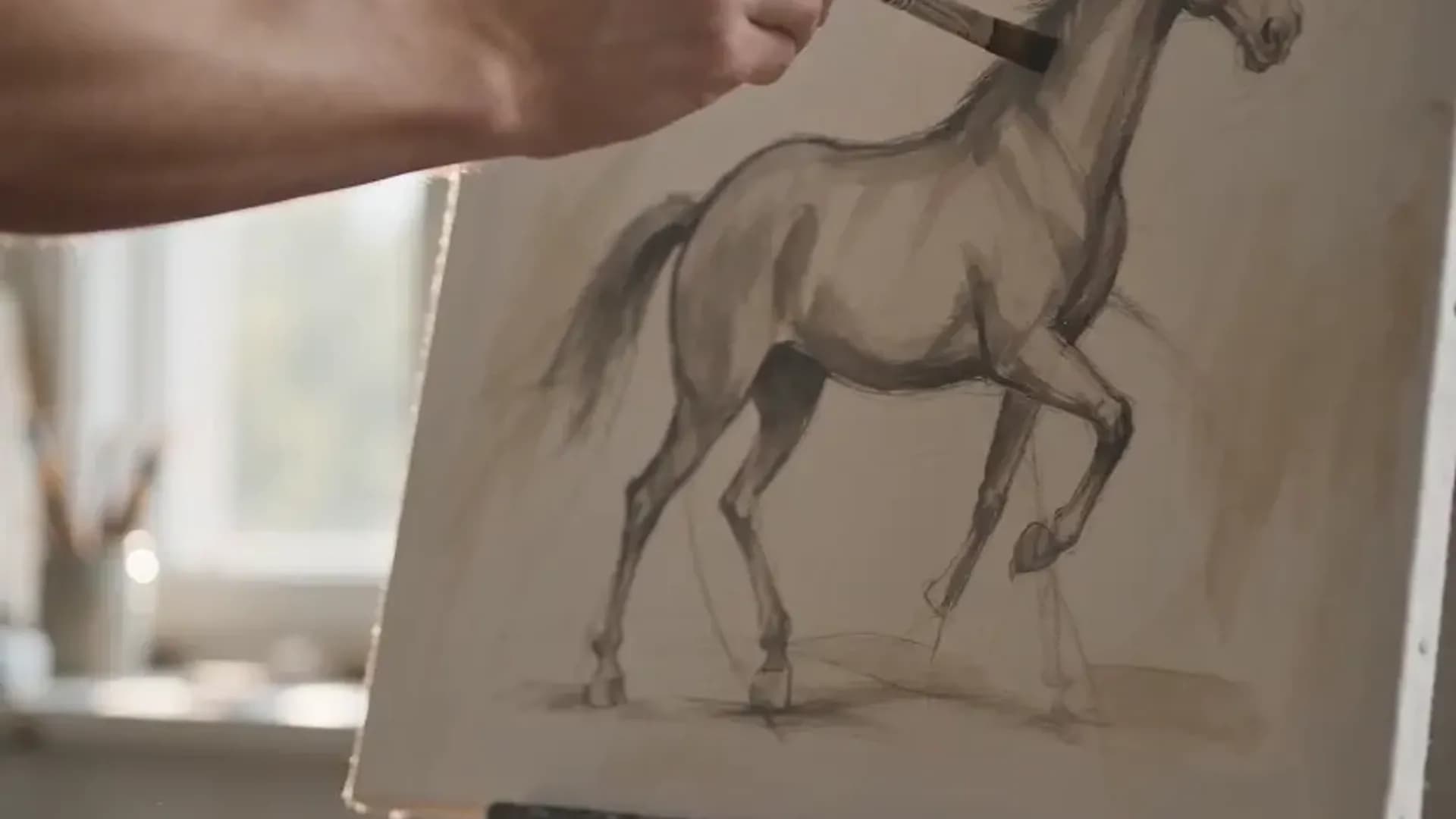
The horse is considered one of the hardest animals to draw. Long legs, complex joints and musculature that is always in motion demand close observation.
Start with the gesture
Before the details, capture the line of movement in a few strokes: the curve of the neck, the line of the back and the direction of the legs. Quick one- or two-minute sketches train the eye to see what matters.
Proportions that guide you
Many artists use the length of the head as a unit of measure to compare neck, body and height. It is not a strict rule, but it helps keep the whole coherent.
Look more and erase less: drawing improves when the eye slows down.
Eadweard Muybridge’s photographic sequences, in the late nineteenth century, showed for the first time how the legs move at the gallop. Studying real references is still the best path.