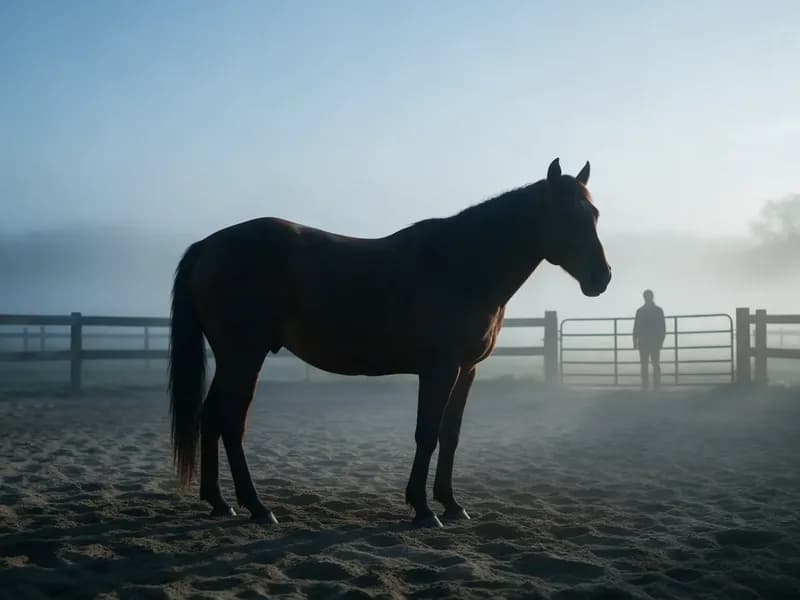
What a horse’s eyes and ears reveal
Ears, eyes, nostrils and tail form a silent language. Learning to read it is the first step toward a relationship of trust.
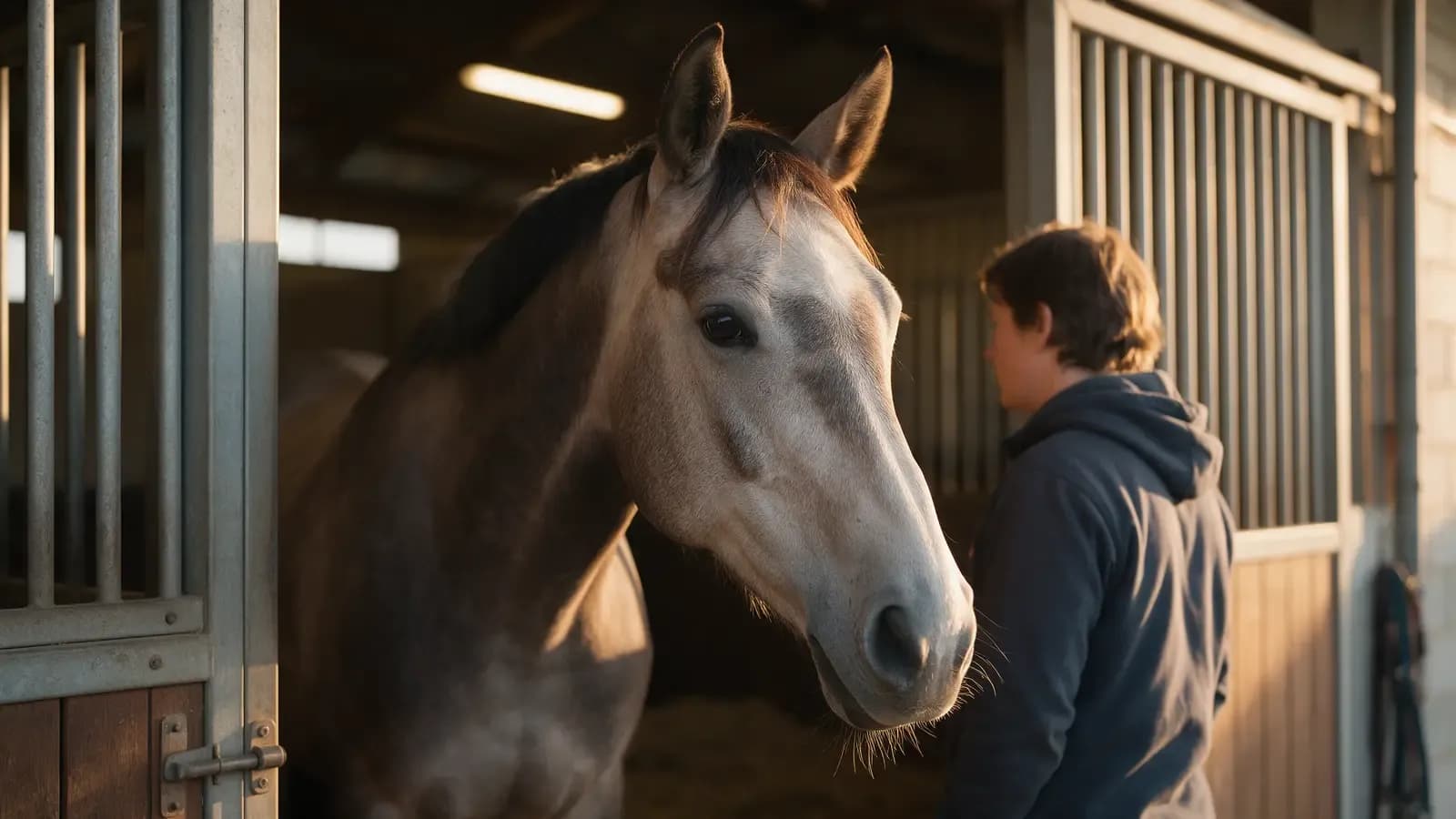
The horse is a prey animal. For millions of years, survival depended on sensing danger before anyone else and warning the herd without making a sound. That is why almost everything a horse feels shows up in its body first.
The ears point to attention
The ears turn independently and work like a pointer: they show where the horse is paying attention. Soft ears held slightly to the side usually mean rest; ears pricked firmly forward, interest; ears pinned back, discomfort or irritation.
Eyes, nostrils and mouth
A soft gaze with slow blinking goes with calm states. When the white of the eye shows often and the nostrils flare, the horse is on alert. Licking and chewing after a moment of tension usually signals that the horse is processing the situation and relaxing.
Reading a horse means looking at the whole picture, never a single detail.
No signal should be read on its own. Head carriage, neck tension, tail movement and context tell the full story. Calm, daily observation is what turns scattered signals into understanding.