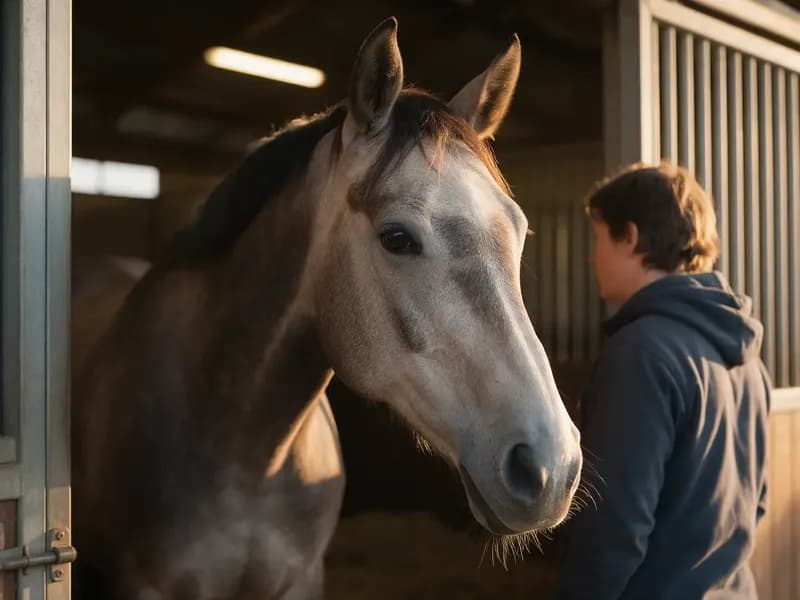
Why horses spook — and how to help them
Spooking is the natural response of a flight animal. Understanding its vision and instincts helps build a sense of safety, step by step.
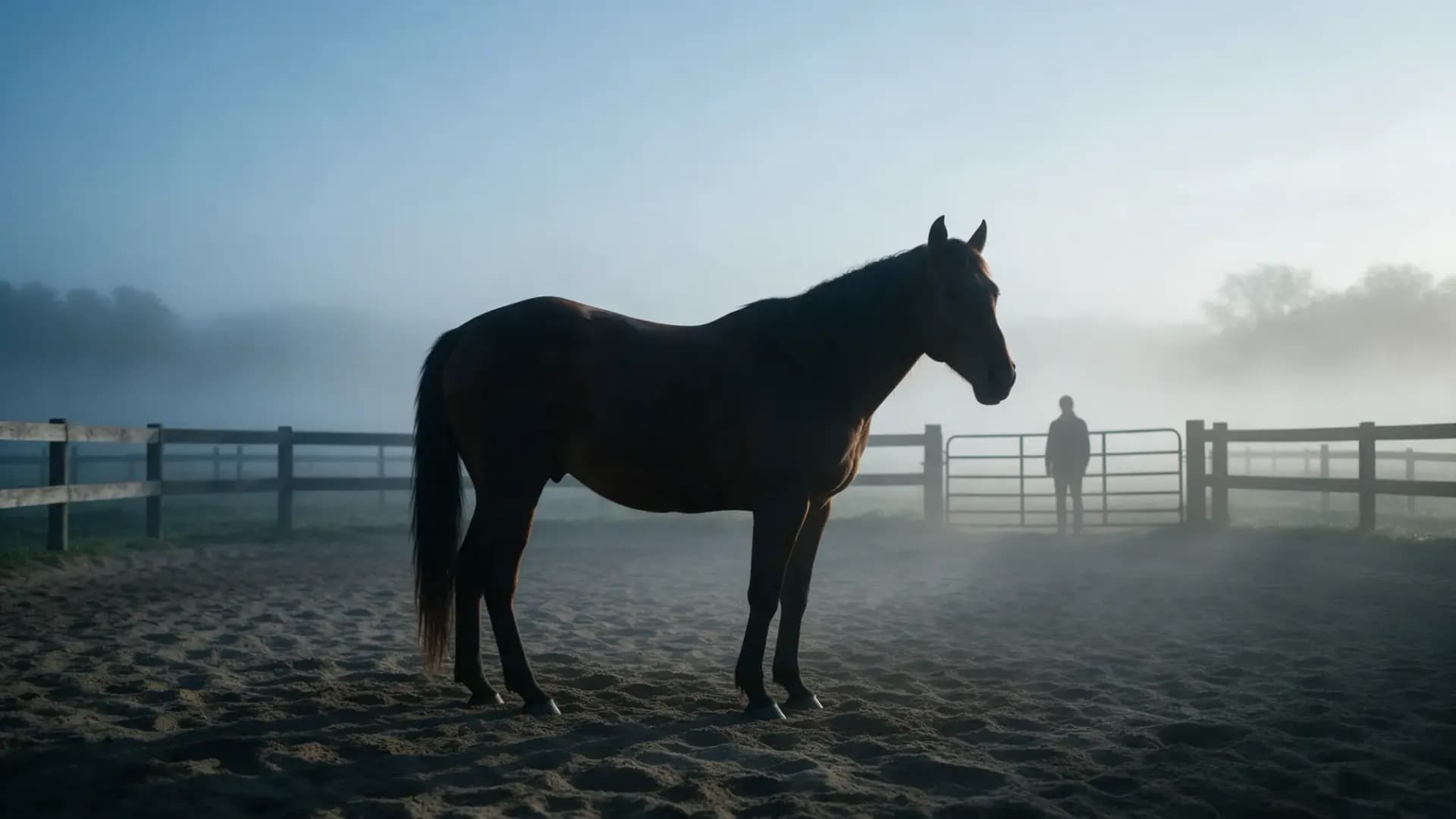
For a horse, running first and investigating later has always been the safest strategy. A plastic bag in the wind or an unexpected shadow can trigger that response before any reasoning takes place.
A field of vision unlike ours
With eyes on the sides of its head, the horse sees almost everything around it, but has blind spots right in front of its muzzle and directly behind. Approaching from the side and speaking calmly avoids unnecessary surprises.
Habituation, not confrontation
Forcing a horse to face what frightens it usually makes the fear worse. It works better to introduce the stimulus gradually, at a distance where the horse can stay calm, and to reward every sign of relaxation.
The calm of the handler is the horse’s first safe place.
Steady breathing, predictable movements and patience tell the horse there is no danger. Over time, trust in the handler starts to outweigh the instinct to flee.